
| 品牌 | 货号 | 纯度/规格 | 价格 | 库存 |
|---|---|---|---|---|
| 分细生物 | FXs39334 | 50ul | ¥1180 | 大量 |
- 商品详情
Host : Rabbit
Clonality : Polyclonal
GeneID : 12514
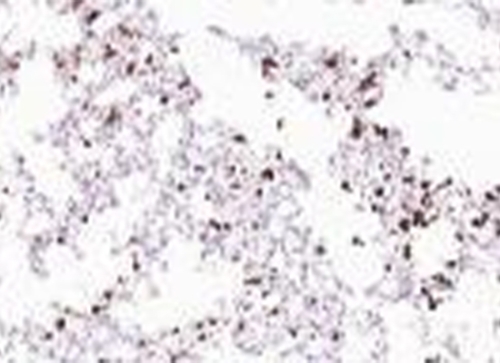
Target : CD68
Isotype : IgG
SWISS : P31996
Immunogen : KLH conjugated synthetic peptide derived from mouse CD68: 111-210/335.<Extracellular >
Purification : affinity purified by Protein A Concentration:1mg/ml
Storage : Preservative:0.02%Proclin300,Constituents:1%BSA,0.01M PBS, pH7.4. Shipped at 4℃.Store at -20℃for one year.Avoid repeated freeze/thaw cycles.
Background : This gene encodes a 110-kD transmembrane glycoprotein that is highly expressed by human monocytes and tissue macrophages.It is a member of the lysosomal/endosomal-associated membrane
glycoprotein (LAMP)family.The protein primarily localizes to lysosomes and endosomes with a smaller fraction circulating to the cell surface.It is a type I integral membrane protein with a heavily glycosylated extracellular domain and binds to tissue-and organ-specific lectins or selectins.The protein is also a member of the scavenger receptor family.Scavenger receptors typically function to clear cellular debris,promote phagocytosis,and mediate the recruitment and activation of macrophages. Alternative splicing results in multiple transcripts encoding different isoforms.[provided by RefSeq,Jul 2008]CD68 (Macrosialin)is a 110 kDa integral membrane glycoprotein predominantly expressed on the intracellular lysomsomes of
monocytes and macrophages and to a lesser extent by dendritic cells and peripheral blood granulocytes.Also,CD68 could play a role in phagocytic activities of tissue macrophages,both in
intracellular lysosomal metabolism and extracellular cell-cell and cell-pathogen interactions.CD68 is expressed by interdigitating reticulum cells in tonsil and some histiocytic lymphoma or
histiocytosis,acute myeloid leukemia (AML),and granulocytic sarcoma.Elevated expression of CD68 has been demonstrated on CD34+cells in various human malignancies,including several Acute Myeloid Leukemia studies.

